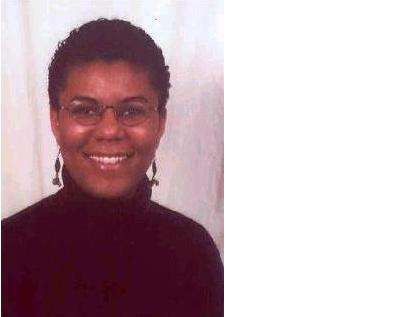
 If you love history, do stop by the website New Books in History. Dr. Marshall Poe of the University of Iowa hosts a weekly podcast featuring a historian talking about a ..... new book in history. Dr. Poe is an expert in Russian history and has even played basketball with President Barack Obama! He and I had a delightful conversation about Harriet Powers and her quilts. I also shared my thoughts that if there is a Harriet Powers' quilt as-yet-unidentified still out there, it is likely in Iowa and from a September 1959 auction of the contents of Port Sunshine, the Keokuk, Iowa home of James and Lorene Curtis Diver. If you are on Facebook, check out New Books in History there. Enjoy!
Showing posts with label interview. Show all posts
Showing posts with label interview. Show all posts
Friday, November 19, 2010
New Books in History features "This I Accomplish," the book on Harriet Powers
If you love history, do stop by the website New Books in History. Dr. Marshall Poe of the University of Iowa hosts a weekly podcast featuring a historian talking about a ..... new book in history. Dr. Poe is an expert in Russian history and has even played basketball with President Barack Obama! He and I had a delightful conversation about Harriet Powers and her quilts. I also shared my thoughts that if there is a Harriet Powers' quilt as-yet-unidentified still out there, it is likely in Iowa and from a September 1959 auction of the contents of Port Sunshine, the Keokuk, Iowa home of James and Lorene Curtis Diver. If you are on Facebook, check out New Books in History there. Enjoy!


Sunday, June 15, 2008
Trish Williams - New Videocast interview

If you have a moment, check out the video interview with Chicago quilter and dollmaker Trish Williams by Bonnie McCaffery! Trish is a member of PAQA, The Professional Art Quilt Alliance as well as the Sew What Art Quilters. Trish & Bonnie - thank you for the video! Enjoy!
Tuesday, January 01, 2008
Carole Samples - Crazy Quilt Stitches


................... .....................Sistah quilter Carole Samples is an expert on crazy quilt stitching! Back in 1999 the American Quilter's Society published her book, Treasury of Crazy Quilt Stitches: A Comprehensive Guide to Traditional Hand Embroidery Inspired by Antique Crazyquilts, which has now sold almost 24,000 copies in four printings!
Mrs. Samples fell in love with Crazy Quilts and their fascinating stitches in 1988. In an email interview, Mrs. Samples said she "came to understand The Really Important Thing: that no one who embroiders her quilts can have enough designs for her seams!" In researching and writing her book, Mrs. Samples said "My hope had been to provide the background information that would let everyone in on the basic, most obvious methods behind the building of complex stitchery structures.... I believe that my book has, more than anything else, given courage to a lot of women who did not know they could create even one block of pretty crazywork."
Treasury of Crazy Quilt Stitches "contains mostly "gently-challenging" to very challenging designs among its 3,030 hand-drawn illustrations," Mrs. Samples related. "The book almost demands that the reader practice in order to excel."
Well, there are others in the blogsphere who admire and practice with Mrs. Samples' book:
* Big Horn Mountain Creations - See Gail's sampler in progress!
* Thelma's Sew n Things - She's just starting out with the book
* When This You See, Remember Me
* Allie's in Stitches
And, even HGTV Simply Quilts Carole Samples interview
Monday, July 09, 2007
Martha Ann's Quilt Play debuts at P.S. 76

 Earlier this year I was invited to P.S. 76 - A. Philip Randolph Elementary School in Harlem - for my very first author's visit for Martha Ann's Quilt for Queen Victoria. The school could not have been more welcoming, particularly Principal Charles Deberry, Ms. Marie Vallon, Librarian, and dear Cleo! The students asked engaging questions and were so enthusiastic about Martha Ann's story. Well, image my surprise to learn that one 4th grade class went on to stage their class play based on Martha Ann's Quilt for Queen Victoria! Mr. Saneel Boodram, who works with 4th graders at P.S. 76 and is a 1999 filmmaking graduate from the New York Institute of Technology, wrote and directed the play. I asked Mr. Saneel, as he's called, about the play and his interest in using performance in teaching.
- What made you interested in combing teaching and performing? "Children love to perform. It makes them feel important, special; dedicated to the roles that are given to them. When you teach a student to perform - you are also teaching them to be disciplined, focused and more independent. No one can make that part special but themselves. Combining teaching and performing, to me, levels out the school year for the class. It's not all about just the books, the math and the science. The Arts is a great gift you can introduce to a child. The # 1 factor for combining teaching and performing - RESPONSIBILTY. " Mr. Saneel went on to comment, "It is [the student's] responsibility to learn their lines, their body movements, when to speak, walk, run, cheer, look directly into the eyes of another cast member, cry, etc. It also brings out their personalities more - students who were quite shy came out of their shells and put on a show in front of the audience. They get recognition, love, praises from performing in plays."
- Can you share with us the key factors in putting on a school play? "The MAIN key factor in putting on a school play is a script. Once you have gotten down all the characters, dialogue, settings, time into one script then everything else is a go. Finding voices to act out the words of the play can be a bit of a pickle. Auditioning 9 and 10 year olds (the age range for 4th grade) for the roles can be tense, for me and the students vying for a part. Rehearsals, costumes, sound effects, lighting, emotions of characters are all key factors for a school play."
- There were two plays your class performed. The other play showcased famous African Americans, including Malcolm X, The Supremes, and Dorothy Dandridge. How did your 4th graders relate to Martha Ann's Quilt for Queen Victoria as one of the year's production? "Martha Ann's Quilt for Queen Victoria, part one of Celebrating Diversity, was the only major play production of the school year. I did my play in May - with acting, musical performances, costumes, emotions and a lesson learned. The students related very well to the subject area - about their ancestors. You see, the Martha Ann play taught them that ordinary black folk from far away made a difference for their future. They weren't glamorous, fabulous or popular but it set the path for good things to come for future generations. The second play taught them that through sacrifice and motivation famous people made a difference for the famous African-Americans today. The entire lesson was a connecting circle - Martha Ann sacrificed and followed her dream - just as the famous people did in the second part of the play."
Sunday, July 08, 2007
Meet Laura R. Gadson - Portrait Quilter

Let me introduce you to Sistah Quilter Laura R. Gadson, who specializes in portrait quilts. The quilt in the photo here is currently on exhibit at the Stitching Our Stories Exhibit at the Countee Cullen Library in Harlem. I recently emailed Laura about her work.
Laura, how did you get started making portrait quilts? "It all started with a picture of my sister when she was younger. Thisphotograph became my first portrait quilt titled “Lisa and the Color Yellow”. Myfather took many black and white pictures of us as we were growing up and hedeveloped them himself in his darkroom in our basement. His photos were thefirst inspiration for the portrait quilts."
How long does typically take to make one of your portrait quilts?
"The portraits don’t take as long as many may think. I can finish a one-subjectsmall quilt top in a day (a day for me can mean from early morning to late, lateevening). The selection and preparation of the fabrics, deciding how to shade asubject, some intricate cutting and the use of an elaborately pieced boarder orbackground can take time. Currently much of my work is about poster size but Ihave plans to work increasingly larger which will take more time."
"The portraits don’t take as long as many may think. I can finish a one-subjectsmall quilt top in a day (a day for me can mean from early morning to late, lateevening). The selection and preparation of the fabrics, deciding how to shade asubject, some intricate cutting and the use of an elaborately pieced boarder orbackground can take time. Currently much of my work is about poster size but Ihave plans to work increasingly larger which will take more time."
What do you enjoy the most about being part of the Harlem Girls Quilting Circle?
"The eating and talking that takes place at our monthly meetings! I also enjoythe “big reveal” portions of our meetings where members get to “whip out” theircurrent masterpieces. They are always inspiring. Harlem Girls Quilting Circle is where I got my quilting start. We have been meeting monthly for about 5 years and there is never a dull moment creatively or personality wise."
"The eating and talking that takes place at our monthly meetings! I also enjoythe “big reveal” portions of our meetings where members get to “whip out” theircurrent masterpieces. They are always inspiring. Harlem Girls Quilting Circle is where I got my quilting start. We have been meeting monthly for about 5 years and there is never a dull moment creatively or personality wise."
Mark your calendars, you can see more of Laura's portrait quilts at the upcoming exhibit, Folks and Family: Quilt Art By Laura R. Gadson - July 27 - September 13, 2007, Russ Berrie Pavilion, Columbia University, 1150 St Nicholas Ave., New York City, New York. Laura does accept commissions. You can see more of her works on Laura's blog, The Gadson Gallery. Laura, continued success!
Monday, May 28, 2007
3 Questions with Deborah Grayson


....................Quilter and dollmaker Deborah Grayson just launched a blog - Urban Wild Flower Dolls. I asked her recently to share a few thoughts on her creations in a 3 Question Interview.
1. Do you see yourself more as a quilter or a dollmaker?
That's like asking me do I consider myself Black or female first LOL. I am both a dollmaker and a quilter simultaneously all of the time and I LOVE IT! Making the dolls influences my quiltmaking and vice versa.
2. You give quilting and dollmaking workshops, what do you enjoy about teaching?
I just love sharing what I know. I enjoy working with other sisters who have a love of quilting and dollmaking. The best way to keep the tradition alive is to document the way that you and Dr. Mazloomi do and to teach.
3. Are you still involved with writing about quilting? Tell us about your blog.
Yes, I am still involved in writing about quilting. I am currently making revisions on an article, Who Can Speak for Others: Race and Place in Debates about Hidden in Plain View, for the Journal of Western Folklore. It's an extended version of a paper I gave two years ago at the American Folklore Society. The essay discusses who has the right to construct and control narratives about quilts and quilting traditions among African Americans, and related to that who is allowed to determine what is authentic and true about the work. There's more to it but that's the gist of it.
My blog, In the Studio with UrbanWildFlowerDolls is what I call my production blog. It is one way I share what I am making in my studio. The blog is also a way for collectors of my dolls and quilts to see what goes on behind the scenes in my work. I am very interested in documenting the process of creativity. There is not a whole lot of written documentation out there about the creative thoughts and processes of African American women artists.
Thank you for the opportunity to let me talk about dolls and quilts! Peace (piece!), Deborah
You can visit Deborah's blog at: www.urbanwildflowerdolls.wordpress.com Enjoy!
Thursday, May 10, 2007
African Parish House Quilters - 10th Year!

Congratulations to the African Parish House Quilters for 10 years of quilting! Join the guild as they meet this Saturday at the Martin Luther King Branch Library, 1600 E. Long Street Columbus, OH 43203 from 1pm - 4pm. Way to go co-founder Deborah Pinckney and all the members!
UPDATE - Thanks to Mrs. Pickney for sharing with us via email more about the African Parish House Quilters!
The APH Quilters was founded by Barbara Holt Payne and myself, Deborah E. Pinckney in order to continue and promote the art of quilting primarily among African American women, men and youth. This is to support our heritage and pass on a legacy to current and hopefully future generations. The group is an ecumenical outreach program of The Hebron Baptist Church of which my husband, W. Amanze M. Pinckney is the Founder and Pastor.
We give back to our community with two community service projects each year. One is to make baby quilts for at-risk newborns receiving services through our neighborhood settlement house and quilts for the homeless in our community. To date we have made and donated over 500 quilts, and we received An Outstanding Project Award from First Lady Hope Taft, Chair of the Ohio Make A Difference Day initiative for our 2004 "Community Quilting Day" Project, which is making quilts for the homeless in our community.
We enjoy our fellowship with one another and learning new techniques from one another during our monthly meetings. We also support Central Ohio quilting events, such as the Surface Symposium, the NQS show, Sacred Threads, Quilt Shop Hop and more, usually with our attendance or volunteering.
We are non-discriminatory, so anyone is welcome to join. Individuals interested can do so by coming to our meetings and paying annual dues of $15.00. Meetings are usually the third Saturday of the month from 1-4 p.m. at The African Parish House, 189 N. 20th St., Columbus, OH 43203, 614-258-4496. The house is so named because it once served as the parsonage or parish house for the pastors of a neighborhood A.M.E. Church.
Thursday, October 26, 2006
Bisa Butler - Quilts in Galleries
Bisa Butler, sistah quilter in New Jersey, has her quilts in two galleries: The Hearne Fine Arts Gallery in Little Rock, Arkansas and the E & S Gallery in Louisville, KY.
"My work has always had that kind of hybrid quality because I was a painting major at Howard. I started adding fabric to my paintings because Romare Bearden did that in some of his collages. Little by little the fabric took over the canvas," Bisa shared with me recently.
"My first gallery show was at the Essex County College gallery where my father works. The opening night was so much fun, and I got such positive reinforcement and love from people who just stopped through that I realized all the years I had been hiding my work away I was really missing out on something," Bisa said.
"At that time I really didn't realize that quilters were stigmatized somehow or categorized as crafters and not as artists. I think that is prejudiced and silly. I think that the Gee's Bend show opened up the eyes of many gallery owners about the art of quilts, and of course Faith Ringgold's work. I did have one really embarrassing meeting at a gallery where the owner told me he didn't think there was a place for my type of quilt. He accepted that the qualities of the Gees Bend quilts were the African American quilt aesthetic and that my pieces were not apart of that. I also remember him saying that all sorts of people are now calling themselves "Fiber Artists" and he wasn't sure if they were really artists at all. I felt like my face was about to fall off at that point. I wanted to cry but I just accepted the criticism and was able to walk out of there with some dignity left. I knew deep down that he was wrong."
Bisa continued, "After that I went to the October Gallery in Philadelphia. They do a First Fridays event where the artists pay for wall space. If I remember it was $100 for a 10 x 10 wall space and the work can hang for the whole month until the next Friday. That event is really fantastic for new artists because all of the galleries are open and free to the public. Black, White, young, and old all come out to browse, shop, listen to music, and enjoy the snacks. Some people criticize commercial galleries like the October Gallery but they really helped me to gain my confidence to approach other galleries."
Bisa - thanks for sharing your story! To Black Threads readers - feel free to leave your comments about Bisa, and the challenges and celebrations you have in getting your quilts shown in galleries.
"My work has always had that kind of hybrid quality because I was a painting major at Howard. I started adding fabric to my paintings because Romare Bearden did that in some of his collages. Little by little the fabric took over the canvas," Bisa shared with me recently.
"My first gallery show was at the Essex County College gallery where my father works. The opening night was so much fun, and I got such positive reinforcement and love from people who just stopped through that I realized all the years I had been hiding my work away I was really missing out on something," Bisa said.
"At that time I really didn't realize that quilters were stigmatized somehow or categorized as crafters and not as artists. I think that is prejudiced and silly. I think that the Gee's Bend show opened up the eyes of many gallery owners about the art of quilts, and of course Faith Ringgold's work. I did have one really embarrassing meeting at a gallery where the owner told me he didn't think there was a place for my type of quilt. He accepted that the qualities of the Gees Bend quilts were the African American quilt aesthetic and that my pieces were not apart of that. I also remember him saying that all sorts of people are now calling themselves "Fiber Artists" and he wasn't sure if they were really artists at all. I felt like my face was about to fall off at that point. I wanted to cry but I just accepted the criticism and was able to walk out of there with some dignity left. I knew deep down that he was wrong."
Bisa continued, "After that I went to the October Gallery in Philadelphia. They do a First Fridays event where the artists pay for wall space. If I remember it was $100 for a 10 x 10 wall space and the work can hang for the whole month until the next Friday. That event is really fantastic for new artists because all of the galleries are open and free to the public. Black, White, young, and old all come out to browse, shop, listen to music, and enjoy the snacks. Some people criticize commercial galleries like the October Gallery but they really helped me to gain my confidence to approach other galleries."
Bisa - thanks for sharing your story! To Black Threads readers - feel free to leave your comments about Bisa, and the challenges and celebrations you have in getting your quilts shown in galleries.
Subscribe to:
Posts (Atom)